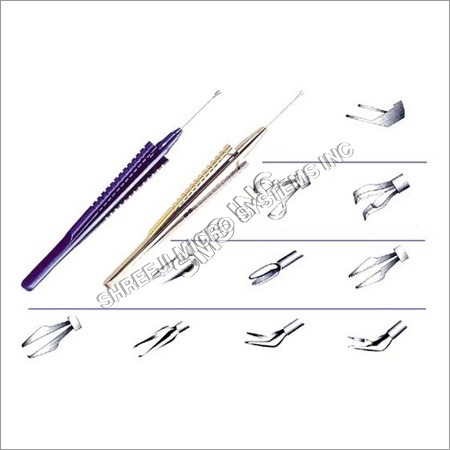
About Ophthalmic Vitreoretinal Instruments
Items:
- Plain Forceps St.
- Serrated Forceps St.
- Platform On Tips
- DZwan Type Forceps
- Pick Forceps
- Foreign Body Forceps
- Straight Scissor
- Curved Scissor
- Vertical Scissor 45 Degree
- Vertical Scissor 90 Degree
- Horizontal Scissor
- DORC Type Forceps
- Membrane Peeler
Exceptional Quality and Safe SterilizationOur ophthalmic vitreoretinal instruments are crafted using superior fiber and steel materials, guaranteeing durability and long-lasting performance. Strict sterilization processes ensure every instrument meets safety standards for use in hospitals and clinics, minimizing the risk of contamination and infection during surgical procedures.
Manual Precision for Delicate SurgeriesDesigned for manual operation, these instruments provide surgeons with optimum control during complex retinal procedures. The ergonomic design enhances grip and maneuverability, supporting accuracy and reducing fatigue through extended surgeries, thus facilitating improved patient outcomes.
FAQs of Ophthalmic Vitreoretinal Instruments:
Q: How are ophthalmic vitreoretinal instruments sterilized for hospital and clinic use?
A: These instruments undergo rigorous sterilization processes using approved medical-grade techniques, ensuring they are free from contaminants and ready for safe use in both hospitals and clinics.
Q: What is the benefit of using fiber and steel materials in these surgical instruments?
A: Fiber and steel construction provides a strong, lightweight, and corrosion-resistant instrument, conserving precision and reliability during delicate eye procedures.
Q: When should vitreoretinal instruments be used during eye surgery?
A: They are used specifically for retinal and vitreous surgeries, including procedures such as retinal detachment repairs and removal of vitreous opacities, as determined by the ophthalmic surgeon.
Q: Where are these ophthalmic surgical instruments manufactured and exported from?
A: These instruments are manufactured, supplied, and exported directly from India by reputable manufacturers with global distribution capabilities.
Q: What is the process for ensuring manual precision during surgery?
A: Manual operation enables surgeons to have detailed tactile feedback, improved maneuverability, and enhanced control during intricate surgical routines, supporting favorable surgical results.
Q: How does using sterilized vitreoretinal instruments benefit patient safety?
A: Sterilization minimizes the risk of postoperative infection, safeguarding patient health and supporting successful surgical outcomes in medical facilities.




 Send Inquiry

 Send Inquiry

 Send Inquiry
 Send SMS